When we think about safety, especially in homes, office buildings, and commercial buildings, fire extinguishers are something we have all come across and consider to be mandatory.
The reality is simple and non-negotiable: a fire extinguisher can only save people when it is placed correctly and is within easy reach when the time comes. When fire breaks out, it moves faster than any human. Confusion sets in immediately. And in those first few seconds, access can make fires smaller or bigger.
Proper placement and accessibility of fire extinguishers require supervision, fire extinguisher inspection, and fire extinguisher maintenance; they can’t be an option. These are important steps to save lives and property.
The First Line of Defense Against Fire
A fire extinguisher is not a decorative piece nor a compliance box; it is the first response tool that goes to work at the very first stage of a fire. A fire creates panic, and adrenaline rushes through individuals who try to get their hands on anything to stop it. When the extinguisher is concealed by clutter, mounted too high, locked behind a cabinet, or too far from the hazard source, seconds can be wasted. When you place the fire extinguisher properly, anyone (be it your employee, visitor, tenant, or family member) can easily grab the fire extinguisher and use it without hesitation.Importance of Strategic Placement
Strategic placement is more than just putting it in a corner. Different organizations like OSHA and NFPA will outline clear recommendations for storage and accessibility of fire extinguishers, but placement needs to be done with common sense and an understanding of the space.1. Quick Visibility and Identification
Fire extinguishers should be easy to see without someone looking around the room. Placing them in busy places, not far from exits and along escape routes, makes them conspicuous during a crisis. Also by adding fire extinguisher signage provides increased visibility at a further distance.
2. Proximity to Fire Hazards
The kitchen, workshop, mechanical room, and electrical panel are more fire-prone areas. By positioning extinguishers closer to hotspots, the chances of early intervention increase.3. Easy Reach and Height Compliance
Even the most effective fire extinguisher is useless if people can’t locate it. Keeping it at a height that all can access makes it so that anyone can pull it off the bracket quickly.4. Clear Paths and Zero Obstructions
Covering up an extinguisher with equipment, boxes, or furniture is more dangerous than you think. Clutter turns a lifesaving tool into a useless decoration. It is vital that the path and area are kept clear.Why Accessibility Saves Lives
Accessibility is more than just “reach”. It’s about mentality. In an emergency, panic clouds judgment. People tend to go toward anything easy to use. Clear signs, lighting, and visible mounting brackets prevent anyone from looking further than five metres. Think of a fire breaking out in an overstuffed electrical switching box. If you have a fire extinguisher readily available, it can stop the fire flames from spreading into walls, wiring, or equipment. If an extinguisher is inside a locked storage room or hidden behind stacked supplies, no one can prevent escalation. Accessibility isn’t convenient; it is a lifesaver in itself.Role of Fire Extinguisher Inspection and Maintenance
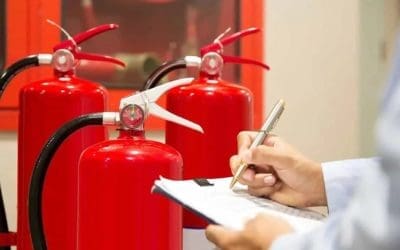
Placement and access are just the first steps. A fire extinguisher must also work when needed. Fire Extinguisher Inspection and Fire Extinguisher Maintenance become very important here.Monthly Fire Extinguisher Inspection
Regular visual inspections ensure that:- Pressure levels are correct.
- Safety seals are intact.
- There is no corrosion or physical damage.
- The extinguisher is in its proper location.
- It has not been tampered with.
Annual Fire Extinguisher Service
Your safety depends on the reliability of your equipment, which is why a certified WFX Fire Extinguisher Technician should perform a thorough annual inspection. We go far deeper than a visual check. Our technicians test mechanical parts, examine valves and hoses for dry rot or blockages, verify the precise chemical charge, and ensure strict compliance with local codes and standards. Through this closer inspection, we ensure the extinguisher isn’t just there and ready, but mechanically sound and chemically active. We identify hidden threats—such as caked powder or microscopic leaks—that could cause a failure when you need protection most. With WFX, you aren’t just buying a sticker; you are securing peace of mind.”Periodic Maintenance and Hydrostatic Testing
Every few years, a professional should work on your fire extinguisher, depending on the type. Parts can wear down, pressure can drop, and seals can fail. Portable Fire Extinguisher units undergo periodic hydrostatic testing measures to ensure that they can withstand internal pressure. The effectiveness of a fire extinguisher depends on how well it is maintained. If you own a car and never check the brakes, would you do that? Portable Fire Extinguisher: Small but Mighty! Portable fire extinguishers are small appliances that can be easily installed and deployed. The power of the mobile is that it allows almost anyone to pick one up and get going without any real training other than a few simple instructions. However, their itinerant nature also makes them susceptible to being moved, misplaced, obstructed, or overlooked during space reconstructions. The importance of routine checks and placement must not be overstated. These small devices can:- Prevent large-scale damage.
- Control small fires before firefighters arrive.
- Protect lives during the most critical seconds.
Common Mistakes to Avoid
Even well-intentioned facilities make dangerous errors. The most common include:- Mounting extinguishers too high.
- Hiding them behind doors.
- Allowing clutter to block access.
- Using incorrect extinguisher types for specific hazards.
- Ignoring expiration dates or maintenance schedules.
Final Thoughts
Prepare yourself for fire emergencies; you might need to evacuate at any time! The proper placement and access of fire extinguishers are very important for fire safety. Together with regular Fire Extinguisher Inspection, Fire Extinguisher Maintenance, expert Fire Extinguishers Service, and use of the right fire extinguisher, they form a powerful shield that safeguards people, property, and peace of mind.
Frequently Asked Questions (FAQ)
1. How often should I inspect my fire extinguisher?
You need to perform two different types of inspections at different intervals:
Monthly Visual Inspection (You do this): Once a month, you (or a designated employee) should check that the extinguisher is in its designated place, not blocked by equipment, and that the pressure gauge is in the green zone. You also need to verify that the pull pin and tamper seal are intact and the canister has no visible dents or rust.
Annual Professional Maintenance (WFX Technician does this): Once a year, a certified technician must perform a thorough maintenance check. This goes beyond looking at the gauge; it involves weighing the unit to detect microscopic leaks, checking the mechanics of the trigger assembly, and ensuring the hose is free of dry rot or blockages (like insect nests).
Note: Every 6 years, stored-pressure extinguishers also require an internal examination where the tank is emptied and recharged.
2. Where should fire extinguishers be placed in a building?
Placement is governed by NFPA 10 standards and depends on the layout of your building and the hazards present. General guidelines include:
Travel Distance: Occupants should not have to travel more than 75 feet to reach a Class A extinguisher (for ordinary combustibles like wood/paper). For Class K (kitchen) or Class B (flammable liquids) hazards, the distance is much shorter typically 30 to 50 feet.
Accessibility: Extinguishers must be located along normal paths of travel, usually near exits, so a person can grab the extinguisher and have an escape route behind them.
Visibility: They must be clearly visible or indicated by signage. They cannot be blocked by furniture, boxes, or open doors.
Height: If the extinguisher weighs 40 lbs or less, the top of the handle must be no more than 5 feet above the floor to ensure an average-sized person can reach it safely.
3. What happens if a fire extinguisher is not serviced regularly?
Compaction: The dry chemical powder inside can settle and harden like concrete over time due to gravity and vibration. If not “fluffed” by a technician, the extinguisher may discharge only the gas pressure while the powder remains stuck inside.
Pressure Loss: Seals and O-rings degrade over time, allowing pressure to leak out slowly sometimes too slowly to be immediately obvious on the gauge.
Liability: If a fire occurs and your extinguishers have expired tags, your insurance company may dispute your claim, citing negligence in maintaining safety equipment.
4. Are portable fire extinguishers effective for home and office use?
Yes, they are highly effective when available and functional.
The 95% Stat: According to industry data, properly maintained portable fire extinguishers are successful in suppressing fires in approximately 95% of the cases where they are used.
Stopping the Spread: They are designed for the “incipient stage” of a fire—the very start. By catching a fire in the first minutes, an extinguisher prevents it from growing large enough to trigger sprinklers or cause structural damage.
5. Can anyone use a fire extinguisher?
While fire extinguishers are designed for ease of use, they are not universally usable without some knowledge or physical capability.
Physical Limitations: Standard 5lb or 10lb extinguishers can be heavy and have a kickback when discharged. Children, the elderly, or those with limited mobility may struggle to lift or aim them steadily.
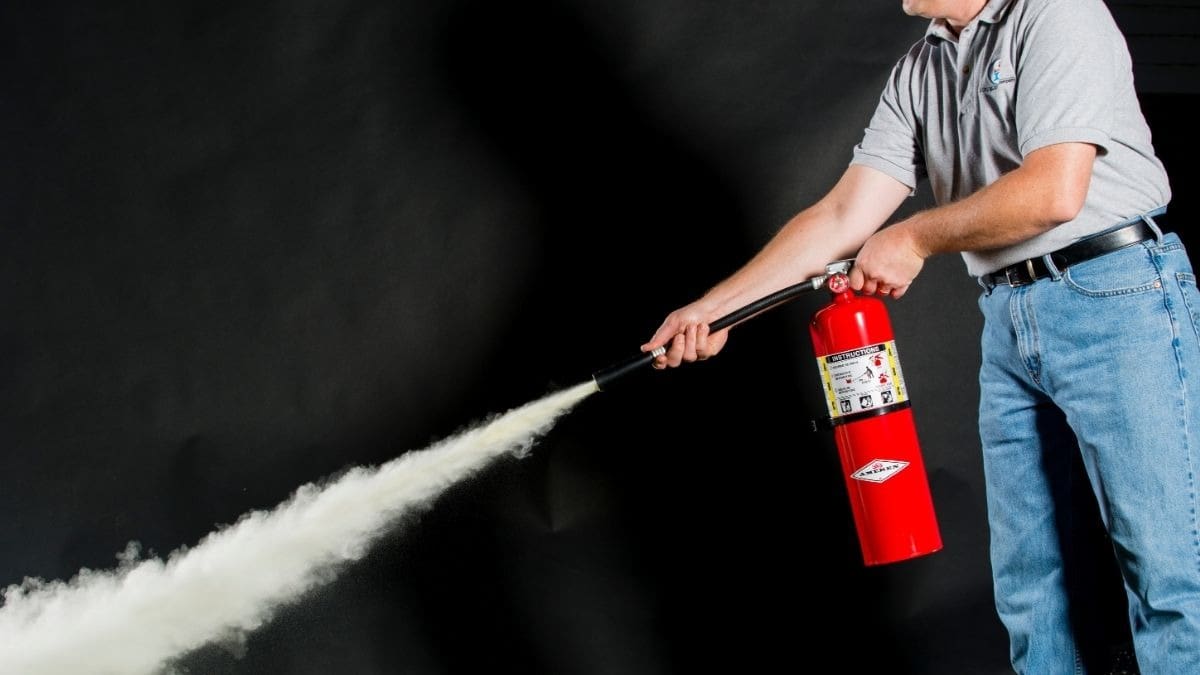
The PASS Technique: To use one effectively, a person must know the PASS acronym: Pull the pin, Aim at the base of the fire, Squeeze the handle, and Sweep side to side. Without this knowledge, panic often leads people to aim at the top of the flames, which wastes the chemical and fails to put out the fire.
Risk Assessment: A user must know when not to use it. If the fire is taller than a person, or if there is heavy smoke, the only safe action is to evacuate.